Understanding the intricate balance of power and utility in game characters is fundamental to appreciating game design, player engagement, and even a title's commercial longevity. Characters are not merely avatars; they are finely tuned systems of abilities, limitations, and strategic applications that define gameplay experiences. For developers, a character's design impacts everything from meta-game balance to monetization strategies. For players, the choice of character dictates playstyle, strategic options, and the overall enjoyment derived from a game.
This analysis moves beyond subjective preference to objectively evaluate characters based on their functional power – raw damage, survivability, crowd control – and their strategic utility – support capabilities, mobility, resource generation, and unique tactical advantages. We examine how these attributes coalesce to create characters that are not only effective in their respective game worlds but also contribute significantly to their game's mechanical depth and player base engagement.
Evaluating Core Character Metrics: Power and Utility
When assessing a game character's overall value, a structured approach is necessary. "Power" typically refers to a character's direct combat effectiveness or capacity to overcome obstacles through sheer force. This includes damage output, defensive capabilities (health, armor, shields), and the ability to control or disable opponents. High-power characters often dictate the pace of engagements and can carry teams or overcome challenging solo content.
"Utility," on the other hand, encompasses a character's non-damage contributions that enhance team performance, enable strategic maneuvers, or provide unique problem-solving capabilities. This can manifest as healing, buffs, debuffs, crowd control (stuns, roots, slows), mobility, vision control, resource generation, or objective manipulation. A character with high utility might not top damage charts but can be indispensable for their ability to enable allies, disrupt enemies, or control the flow of a match. The most impactful characters often strike a compelling balance between these two metrics, offering both personal effectiveness and team-wide strategic value.
1. Kratos
Kratos, from the God of War series, embodies raw, unbridled power coupled with a surprisingly versatile utility kit that evolves across his appearances. His primary strength lies in his devastating melee combat, capable of clearing multiple enemies and inflicting massive damage on bosses. In later iterations, his Leviathan Axe and Blades of Chaos offer distinct combat styles, elemental effects, and crowd control capabilities, allowing players to adapt to varied combat scenarios. His Spartan Rage mechanic provides temporary invincibility and amplified damage, serving as both a powerful offensive burst and a crucial defensive recovery tool. Beyond combat, his ability to manipulate environmental objects and solve puzzles adds practical utility.
Best for: Players seeking a dominant offensive presence and impactful, visceral combat. Also effective for game designers aiming to create a compelling power fantasy character with evolving mechanics.
Pros: Exceptional damage output; robust defensive options; versatile weapon systems; strong crowd control; environmental interaction for puzzle-solving.
Cons: Relies heavily on aggressive engagement, which can be punishing against ranged or highly mobile enemies if not managed correctly. Some utility is context-dependent (e.g., specific environmental puzzles).
Verdict: Kratos consistently delivers a high-impact gameplay experience, balancing overwhelming force with strategic adaptability. His design showcases how a character can evolve mechanically while retaining a core identity of power and purpose.
2. Link
Link, the hero of The Legend of Zelda series, is the quintessential utility character, whose power often derives from his extensive arsenal and problem-solving capabilities rather than raw combat stats. His strength lies in adaptability, utilizing a vast array of weapons, tools, and abilities to navigate complex environments, overcome puzzles, and defeat diverse enemies. From bombs for destruction, arrows for ranged attacks, and boomerangs for item retrieval, to unique abilities like Stasis or Recall, Link’s kit is designed for discovery and strategic application. His master sword provides consistent, reliable damage, but his true power emerges from the creative combination of his various gadgets and powers.
Best for: Players who enjoy exploration, puzzle-solving, and a versatile approach to combat and progression. Ideal for game designs that emphasize player agency and emergent gameplay through tool-based interactions.
Pros: Unparalleled versatility and adaptability; extensive toolset for environmental interaction and puzzle-solving; encourages creative problem-solving; consistent relevance across game progression.
Cons: Individual combat power can be lower than dedicated combat characters without strategic use of his full arsenal. Requires player ingenuity to maximize effectiveness, which might not appeal to all playstyles.
Verdict: Link's design exemplifies utility as a primary driver of power, demonstrating how a character's effectiveness can stem from their capacity to interact with and manipulate their game world in myriad ways.
3. Doom Slayer
The Doom Slayer, protagonist of the modern Doom series, is a masterclass in aggressive utility and relentless power. His core design revolves around "push-forward combat," where offensive actions regenerate health and ammunition, making aggression a defensive strategy. His arsenal is a collection of high-damage, situation-specific weapons, each with unique alternate fire modes that serve as tactical utility (e.g., sticky bombs for weak points, precision bolt for accuracy). The chainsaw provides instant enemy kills for ammunition, and the flame belch generates armor, turning enemies into resources. His extreme mobility, including double jumps and dashes, allows for constant repositioning and evasion, making him a highly dynamic and powerful force.
Best for: Players who thrive on fast-paced, aggressive combat and resource management within high-stakes encounters. Excellent for games designed around maintaining combat flow and rewarding offensive play.
Pros: High damage output across multiple weapon types; unique resource generation mechanics tied to combat; exceptional mobility for evasion and positioning; strong sense of player empowerment.
Cons: Requires constant aggression and precise resource management; less effective in passive or defensive playstyles. The high-octane pace can be overwhelming for some players.
Verdict: The Doom Slayer redefines the power fantasy by integrating utility directly into offensive mechanics, creating a character whose survival and effectiveness are intrinsically linked to continuous, aggressive engagement.
4. Commander Shepard
Commander Shepard from the Mass Effect series offers a unique blend of power and utility, primarily through customization and squad-based tactics. While Shepard's individual combat prowess is significant, defined by player-chosen classes (e.g., Soldier, Adept, Engineer), their ultimate power comes from their leadership and the synergy with their diverse squadmates. Shepard can be built as a pure damage dealer, a biotic crowd controller, or a tech-utility specialist, adapting to various combat roles. Their utility extends beyond combat to narrative influence, diplomatic skills, and crucial decision-making that shapes the galaxy. The ability to command squadmates, combine powers for devastating biotic explosions, and manage resources makes Shepard a highly strategic and impactful character.
Best for: Players who value character customization, tactical squad combat, and narrative agency. Ideal for RPGs where player choices and team composition significantly impact gameplay and story outcomes.
Pros: Extensive class-based customization; powerful squad-based combat synergies; significant narrative and diplomatic utility; adaptability to various combat roles.
Cons: Individual power can feel less impactful without proper squad synergy. The effectiveness is heavily reliant on player build choices and tactical execution.
Verdict: Shepard exemplifies how a character's power and utility can be distributed and amplified through a robust customization system and strategic team management, making them a central figure in both combat and narrative.
5. Tracer
Tracer, from Overwatch, is a prime example of high-mobility utility and burst damage. Her defining abilities are Blink, allowing rapid short-distance teleportation, and Recall, which rewinds her position, health, and ammo to three seconds prior. These abilities grant her unparalleled evasion, flanking potential, and survivability, making her incredibly difficult to pin down. Her dual pulse pistols deliver consistent, high close-range damage, enabling her to quickly eliminate vulnerable targets. While her health pool is low, her utility in disrupting enemy formations, assassinating backline targets, and controlling objectives through sheer presence makes her a high-impact character in competitive play.
Best for: Players who excel at high-skill, fast-paced flanking and disruption. Crucial for game designs that reward individual mechanical skill, strategic positioning, and understanding of team compositions.
Pros: Extreme mobility and evasion; high burst damage potential; effective at disrupting enemy backlines and controlling objectives; high skill ceiling for mastery.
Cons: Very low health pool makes her vulnerable if caught out of position or if abilities are on cooldown. Requires precise aim and excellent spatial awareness.
Verdict: Tracer demonstrates how supreme utility in mobility and evasion, when combined with focused burst damage, can create a character whose strategic value far outweighs their raw defensive stats.
6. Geralt of Rivia
Geralt of Rivia, the protagonist of The Witcher series, offers a balanced blend of combat prowess and investigative utility. As a Witcher, he is a master swordsman, utilizing two distinct blades (steel for humans, silver for monsters) and a variety of combat styles for different enemy types. His power is augmented by a set of five magical Signs (Igni for fire, Aard for telekinetic blast, Quen for a protective shield, Axii for mind control, Yrden for a magical trap), providing both offensive and defensive utility, as well as crowd control. Beyond combat, Geralt’s Witcher Senses offer crucial investigative utility for tracking, finding clues, and understanding the world, making him indispensable for narrative progression and quest resolution. His potion and oil crafting further enhance his combat adaptability.
Best for: Players who appreciate deep lore, strategic combat preparation, and investigative gameplay. Excellent for RPGs that blend action combat with rich storytelling and player choice.
Pros: Versatile combat options with swords and magic; strong investigative and tracking utility; adaptable through alchemy and gear; impactful narrative agency.
Cons: Combat can feel less fluid than dedicated action games; magic utility is often supplementary rather than primary damage. Requires understanding of enemy weaknesses for optimal effectiveness.
Verdict: Geralt’s design expertly merges powerful combat capabilities with essential utility for exploration and narrative, creating a character whose effectiveness is deeply integrated into the game's world and systems.
7. Mario
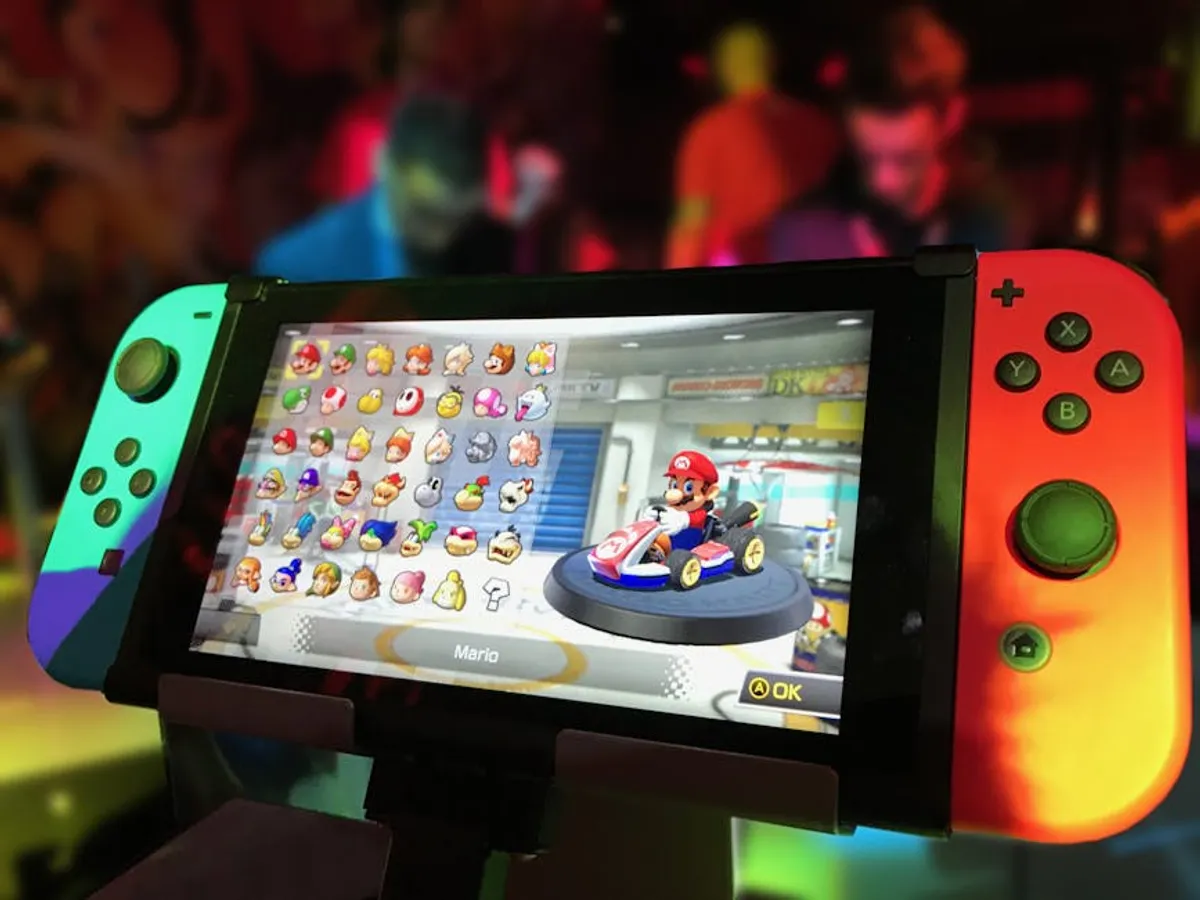
Mario, the iconic hero of Nintendo, defines foundational platforming utility and accessible power. While his direct combat capabilities are often limited to jumping on enemies, his true power and utility stem from his incredible versatility and the array of power-ups he can acquire. From the Super Mushroom for growth and extra hits, the Fire Flower for ranged attacks, to the Cape Feather for flight and the Tanooki Suit for gliding and statue transformation, Mario's utility is about adapting to diverse level designs and overcoming environmental challenges. His consistent jump mechanics and responsive controls are a core utility, allowing precise navigation and interaction with the game world. His power is in his ability to consistently clear obstacles and reach objectives, often through creative use of his environment and power-ups.
Best for: Players of all skill levels seeking accessible yet deep platforming challenges. Essential for game designs focused on environmental interaction, varied level design, and progressive power-up mechanics.
Pros: Highly versatile through power-ups; responsive and intuitive controls; adaptable to various environmental challenges; foundational platforming utility.
Cons: Limited raw combat power without power-ups; effectiveness is highly dependent on available items and level design. Core mechanics can feel simplistic compared to more complex character kits.
Verdict: Mario's enduring appeal lies in his elegant design, where fundamental utility (jumping, movement) is consistently amplified by context-sensitive power-ups, making him a master of environmental mastery rather than direct confrontation.
8. Aatrox
Aatrox, from League of Legends, exemplifies a bruiser character whose power is derived from sustained damage, area-of-effect crowd control, and incredible self-sustain. His kit revolves around his 'Darkin Blade,' a series of three Q abilities that deal increasing damage and knock up enemies if hit by the sweet spot. His W ability, 'Infernal Chains,' roots enemies, and his E, 'Umbral Dash,' provides crucial repositioning. His ultimate, 'World Ender,' massively increases his size, damage, and grants a significant self-revive, turning him into a terrifying front-line threat. Aatrox thrives in extended team fights, soaking damage and dealing out consistent, high-impact blows while healing significantly from his own damage, making him difficult to kill.
Best for: Players who enjoy aggressive, front-line combat with high sustain and impactful area-of-effect abilities. Crucial for MOBA game designs that require durable initiators and consistent damage threats in team fights.
Pros: High sustained damage and self-healing; strong area-of-effect crowd control; excellent team fight presence; impactful ultimate ability for survivability and damage amplification.
Cons: Highly reliant on landing sweet spots of his Q for maximum damage and crowd control. Can be vulnerable to kiting and burst damage if unable to sustain through combat.
Verdict: Aatrox represents a character whose power is defined by his ability to sustain through prolonged engagements while delivering consistent, disruptive damage, making him a formidable force in strategic team compositions.
9. Master Chief
Master Chief, the protagonist of the Halo series, is the epitome of a versatile combat utility character. His power comes from his robust Mjolnir armor, providing significant shields and health, allowing him to absorb damage and regenerate. His utility is in his adaptability to any weapon found on the battlefield, from precision rifles to heavy ordnance, allowing him to always be effective regardless of the situation. His movement, grenade usage, and melee attacks are all finely tuned for tactical engagements. Furthermore, his iconic status and role as a lone super-soldier provide significant narrative utility, driving the core conflict of the series. His design emphasizes player choice in combat scenarios and strategic use of diverse weaponry.
Best for: Players who value adaptable combat, robust defensive capabilities, and tactical engagement in a sci-fi shooter setting. Fundamental for game designs that prioritize moment-to-moment combat decision-making and weapon variety.
Pros: High survivability with regenerating shields; unparalleled weapon versatility; effective in diverse combat ranges and scenarios; strong melee and grenade utility.
Cons: Lacks unique, character-specific active abilities found in other character designs. Effectiveness is highly dependent on weapon availability and player aim.
Verdict: Master Chief's enduring power and utility stem from his balanced combat profile and universal weapon proficiency, making him a consistently reliable and adaptable force in any combat scenario.
10. Dante
Dante, the stylish demon hunter from the Devil May Cry series, defines power through offensive versatility and deep combat mechanics. His strength lies in his vast arsenal of melee weapons and firearms, each with unique move sets and applications, allowing for complex, high-damage combos. His utility comes from his various "Styles" (e.g., Swordmaster for melee, Gunslinger for ranged, Trickster for evasion, Royalguard for defense), which can be switched on the fly to adapt to any combat situation. This system allows players to chain together incredibly diverse attacks, evade efficiently, and even parry powerful blows. His Devil Trigger state provides a temporary power boost, increasing damage, speed, and regeneration, serving as both an offensive burst and a defensive fallback.
Best for: Players who thrive on technical, high-skill action combat and deep combo systems. Ideal for game designs that reward mechanical mastery, strategic weapon, and style switching, and expressive combat.
Pros: Unmatched offensive versatility with multiple weapons and styles; deep combo potential; effective evasion and defensive options; powerful Devil Trigger state.
Cons: High skill floor and ceiling, requiring significant practice to master. Can feel overwhelming to new players due to the sheer number of options and precise execution required.
Verdict: Dante embodies a character whose power and utility are entirely player-driven, offering a rich, expressive combat system that rewards mastery with unparalleled offensive potential and tactical adaptability.
11. Minecraft Steve/Alex
Steve and Alex, the default player characters in Minecraft, represent the pinnacle of open-ended utility and player-driven power. Their inherent power is not in combat prowess but in their ability to interact with and reshape the entire game world. Their core utility lies in crafting, mining, building, and resource management. They can harvest any block, craft any item, and construct anything imaginable, from simple shelters to complex automated farms. While their base combat is rudimentary, their power scales exponentially with the tools, weapons, and armor they create, allowing them to defeat powerful enemies and explore dangerous dimensions. Their utility is the very foundation of the game's sandbox nature, offering limitless creative and survival possibilities.
Best for: Players who prioritize creativity, exploration, resource gathering, and world-building. Fundamental for game designs that offer emergent gameplay and a high degree of player freedom.
Pros: Infinite creative and building utility; scalable power through crafted items and gear; fundamental for resource management and exploration; allows for diverse playstyles (builder, explorer, combatant).
Cons: Limited inherent combat abilities without player investment in crafting. The open-ended nature might lack direction for players seeking structured progression.
Verdict: Steve/Alex demonstrate that true character utility can be defined by the capacity to interact with and transform a game world, where power is a direct reflection of player ingenuity and resourcefulness.
12. Samus Aran
Samus Aran, from the Metroid series, is a character whose power and utility are intrinsically linked to progression and exploration. Her base form is capable, but her true strength emerges from the acquisition of suit upgrades and abilities. From the iconic Morph Ball for navigating tight spaces, the Screw Attack for invincibility and damage, to various beam weapons and missiles for combat and environmental destruction, Samus's utility is about unlocking new pathways and overcoming previously impassable obstacles. Her power is a direct result of her expanding arsenal, transforming her into an increasingly formidable force. Her design encourages backtracking and methodical exploration, making her an expert in environmental mastery and strategic combat.
Best for: Players who enjoy exploration, progressive power acquisition, and methodical combat. Ideal for "Metroidvania" game designs that emphasize interconnected world maps and ability-gated progression.
Pros: Power and utility scale progressively with upgrades; excellent environmental traversal and puzzle-solving capabilities; versatile combat options with various beams and missiles; strong sense of player growth.
Cons: Initial power can feel limited until key upgrades are acquired. Combat can sometimes feel less fluid compared to dedicated action characters, prioritizing strategy over pure speed.
Verdict: Samus Aran showcases a character design where power and utility are not static but dynamically grow through exploration and discovery, making her a master of environmental interaction and progressive dominance.
Analyzing Character Impact on Player Engagement and Game Longevity
The selection and design of compelling game characters are critical for both player engagement and a game's long-term success. Characters with well-defined power and utility archetypes create distinct playstyles, cater to diverse player preferences, and contribute to the strategic depth of a title. For developers and publishers, understanding which character attributes resonate most with their target audience can inform future character releases, balance adjustments, and even marketing campaigns. Highly impactful characters often become brand ambassadors, driving community discussion, competitive scenes, and merchandise sales. Evaluating character performance extends beyond raw statistics; it involves analyzing player pick rates, win rates, community sentiment, and how a character influences meta-game evolution. A character that consistently offers strategic depth and a satisfying power fantasy ensures sustained player interest and contributes significantly to a game's commercial viability over time.
Frequently Asked Questions
Q: How do you define "power" versus "utility" in game characters?
A: "Power" generally refers to a character's direct offensive or defensive capabilities, such as damage output, health, or crowd control. "Utility" refers to non-damage contributions like healing, buffs, debuffs, mobility, resource generation, or strategic advantages that support the team or enable specific tactics.
Q: Why are some characters considered powerful despite low damage output?
A: Characters can be powerful through high utility. For example, a character with excellent healing, crowd control, or mobility can enable their team to deal more damage or survive longer, indirectly contributing to overall combat effectiveness, even if their personal damage is low.
Q: How does character design influence a game's commercial success?
A: Well-designed characters with distinct power and utility profiles attract diverse players, foster competitive play, and encourage player investment. Iconic characters can become central to a game's brand identity, driving community engagement, content creation, and potentially monetization through cosmetic sales or new character releases.
Q: Can a character be both high power and high utility?
A: Yes, many top-tier characters achieve this balance. For instance, a character might have high damage output (power) while also possessing abilities that grant mobility or crowd control (utility), making them exceptionally versatile and impactful in various situations. This balance is often a key factor in their meta-game dominance.
Q: What role does player skill play in a character's effectiveness?
A: Player skill significantly impacts a character's effectiveness, particularly for characters with high skill ceilings. A character with complex mechanics or demanding execution requirements might appear less powerful in the hands of an inexperienced player but can be devastatingly effective when mastered, maximizing both their inherent power and utility.