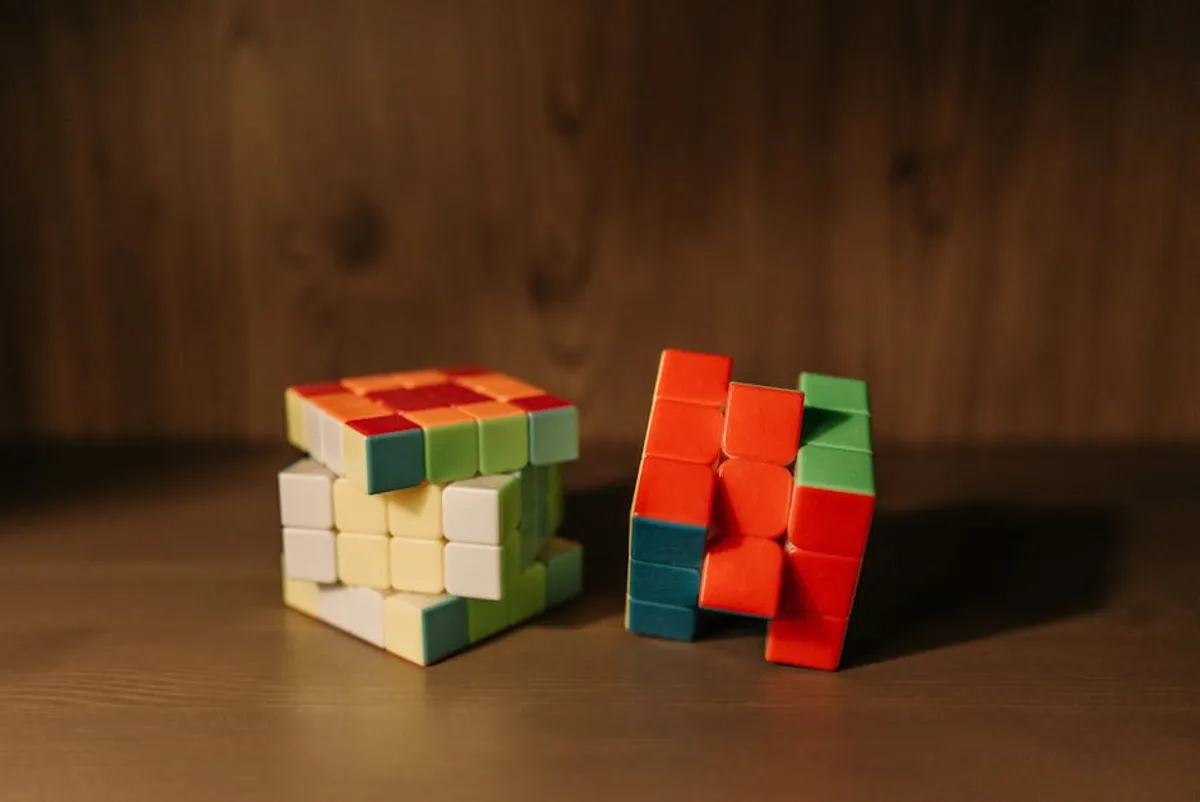
Selecting the right puzzle game involves more than just finding a diversion; it means identifying titles that genuinely stimulate cognitive functions while fitting into brief, fragmented schedules. The market is saturated with options, from classic logic challenges to modern spatial reasoning tests, each promising engagement and mental acuity. Understanding the specific cognitive benefits and time commitment of each game type is crucial for making an informed choice that aligns with individual goals for brain training and quick, effective breaks.
What to Look For in Puzzle Games for Brain Training and Quick Breaks
When evaluating puzzle games, prioritize several key attributes to ensure they deliver both cognitive benefits and practical playability for short sessions.
- Cognitive Focus: Determine what specific mental skills you aim to enhance. Some games target logic and deduction, others spatial reasoning, memory, or linguistic abilities. A game's core mechanic should directly challenge the desired cognitive area.
- Session Length and Pacing: For "quick breaks," look for games with short, self-contained levels or rounds that can be completed in 5-15 minutes. The ability to pause and resume without penalty is also vital.
- Difficulty Curve and Progression: Effective brain training requires a game that scales in difficulty, offering increasing challenges as your skills improve. A clear sense of progression keeps engagement high.
- Replayability and Variety: Games that offer daily challenges, procedural generation, or a vast library of puzzles maintain long-term interest. Repetitive puzzles with no variation quickly lose their training efficacy.
- Interface and Accessibility: An intuitive interface minimizes frustration, especially during short play sessions. Consider platform availability (mobile, PC, console) and whether the game can be played offline.
- Monetization Model: Free-to-play games often include ads or in-app purchases. Evaluate whether these interruptions detract from the training experience or if a premium, ad-free model is preferable for sustained focus.
1. Sudoku
Sudoku remains a foundational logic puzzle, requiring players to fill a 9x9 grid with digits so that each column, row, and 3x3 subgrid contains all digits from 1 to 9 without repetition. Its strength lies in its pure deductive reasoning challenge, demanding careful observation and sequential thought. The game offers various difficulty levels, making it accessible for beginners while providing complex challenges for advanced players. Many mobile applications provide daily puzzles, hints, and error checking, enhancing the training experience.
Best for: Sharpening logical deduction, pattern recognition, and sustained concentration during focused breaks.
Pros:
- Directly trains logical thinking and problem-solving.
- Available in countless free and paid apps, physical books, and online versions.
- Puzzles can be completed in varying timeframes, from a few minutes for easy ones to longer sessions for hard grids.
- Clear, objective success criteria with no ambiguity.
Cons:
- Can become repetitive without varied puzzle types.
- Less visual stimulation compared to other puzzle games.
- Not ideal for those who prefer narrative or action-oriented gameplay.
Verdict: Sudoku is an indispensable tool for anyone seeking to improve pure logical reasoning. Its simplicity belies its depth, offering consistent mental workouts suitable for any short break.
2. New York Times Crossword
The New York Times Crossword app provides daily crosswords ranging from easy Monday puzzles to challenging Saturday and Sunday editions. Beyond traditional word association, these puzzles often incorporate clever wordplay, puns, and general knowledge, engaging multiple cognitive domains. The app supports mini-crosswords for very quick breaks and offers a robust archive for continuous play. Its consistent quality and cultural relevance make it a benchmark for word puzzles.
Best for: Enhancing vocabulary, general knowledge recall, lateral thinking, and linguistic pattern recognition.
Pros:
- High-quality, professionally curated puzzles daily.
- Varies difficulty throughout the week, catering to different skill levels and time commitments.
- Mini-crosswords are perfect for 2-5 minute breaks.
- Engages both left-brain (logic, language) and right-brain (creativity, pattern) functions.
Cons:
- Subscription required for full access to daily puzzles and archives.
- Relies heavily on American English and cultural references, which may not suit all international players.
- Some puzzles can be too challenging for casual players, leading to frustration.
Verdict: For word enthusiasts and those looking to stretch their linguistic and general knowledge, the NYT Crossword offers a premium, consistent brain training experience, especially with its quick mini-puzzles.
3. Tetris
Tetris, in its various mobile incarnations, remains a timeless classic for spatial reasoning and quick decision-making. Players manipulate falling blocks (tetrominoes) to create complete horizontal lines, which then disappear. The game progressively speeds up, demanding rapid spatial analysis, foresight, and reaction time. While simple in concept, mastering Tetris requires advanced planning and quick mental rotation, making it an excellent exercise for spatial intelligence under pressure.
Best for: Developing spatial reasoning, hand-eye coordination, rapid decision-making, and stress reduction through focused play.
Pros:
- Improves spatial awareness and mental rotation abilities.
- Highly addictive and engaging, promoting flow states.
- Quick rounds are ideal for short breaks, with sessions lasting from minutes to hours.
- Widely available across platforms, often free or low-cost.
Cons:
- Can become intensely fast-paced, potentially increasing stress for some players.
- Lacks variety in core mechanics beyond increasing speed.
- Less emphasis on pure logic or linguistic skills.
Verdict: Tetris is a foundational spatial puzzle that delivers immediate, intense cognitive engagement. It's perfect for quick bursts of mental agility training, particularly for those needing to sharpen their visual-spatial skills.
4. Two Dots
Two Dots is a minimalist connect-the-dots puzzle game where players connect same-colored dots vertically or horizontally to clear them from a grid. The game introduces various mechanics, such as creating squares to clear all dots of a color, and unique objectives per level. Its clean aesthetic and soothing soundtrack provide a calming yet mentally stimulating experience. The puzzles require strategic planning within a limited number of moves, promoting efficient problem-solving.
Best for: Strategic planning, pattern recognition, visual discrimination, and a relaxing yet engaging mental exercise during short breaks.
Pros:
- Visually appealing and calming, reducing cognitive load while still challenging.
- Hundreds of levels with varied objectives keep gameplay fresh.
- Encourages foresight and efficient move planning.
- Suitable for quick, casual play sessions.
Cons:
- Can become repetitive over time for some players.
- In-app purchases can be tempting for extra moves or lives, though not strictly necessary.
- Less emphasis on complex logical deduction compared to Sudoku.
Verdict: Two Dots offers a stylish and accessible entry into strategic puzzle gaming. It effectively trains visual planning and pattern recognition in a low-stress environment, making it excellent for unwinding while still engaging the brain.
5. Wordle
Wordle is a daily word puzzle where players have six attempts to guess a five-letter word. Feedback is provided after each guess, indicating correct letters in the correct position, correct letters in the wrong position, or incorrect letters. Its simplicity, daily refresh, and social sharing aspect have made it a global phenomenon. The game requires deductive reasoning, vocabulary recall, and strategic letter placement, all within a very short daily commitment.
Best for: Boosting vocabulary, logical deduction in a linguistic context, and quick, daily mental warm-ups.
Pros:
- Extremely quick to play (typically 2-5 minutes per day).
- Engages vocabulary, spelling, and deductive reasoning.
- Free to play and accessible via web browser, no app download needed.
- The daily challenge fosters routine mental engagement.
Cons:
- Only one puzzle per day, limiting total play time.
- Can be frustrating if the word involves obscure letters or common letter combinations that lead to multiple possibilities.
- No difficulty scaling or varied game modes.
Verdict: Wordle excels as a daily, low-commitment brain trainer for linguistic skills. Its brevity and accessibility make it a perfect fit for integrating a quick cognitive challenge into any routine.
6. Threes!
Threes! is a sliding block puzzle where players combine numbered tiles (multiples of three) on a 4x4 grid. The goal is to create the highest possible number tile before the grid fills up. It’s a deceptively simple game that demands foresight, strategic placement, and careful planning to avoid dead ends. The elegant design and subtle mechanics make it a highly engaging and mentally stimulating experience, improving numerical and spatial reasoning.
Best for: Enhancing numerical reasoning, strategic planning, spatial awareness, and efficient resource management within a confined space.
Pros:
- Deep strategic depth from simple rules.
- Improves numerical and spatial planning skills.
- Quick rounds, allowing for play during short breaks.
- Clean, minimalist design with charming audio cues.
Cons:
- Can be challenging to master, potentially frustrating for new players.
- Requires a one-time purchase on most platforms.
- Less variety in gameplay modes compared to other puzzle games.
Verdict: Threes! is a masterclass in elegant puzzle design, offering a profound mental workout in numerical and spatial strategy. It's an excellent choice for those who appreciate deep gameplay from simple mechanics, perfect for focused short sessions.
7. Monument Valley
Monument Valley is a surreal exploration puzzle game where players guide Princess Ida through optical illusions and impossible architecture. The puzzles involve manipulating structures, rotating platforms, and shifting perspectives to create new paths. Each level is a beautifully crafted piece of art, and the game’s mechanics directly challenge spatial reasoning, perspective-taking, and creative problem-solving. Levels are short and self-contained, making it suitable for quick, immersive breaks.
Best for: Developing spatial reasoning, perspective-taking, visual problem-solving, and enjoying a uniquely aesthetic and calming experience.
Pros:
- Stunning art direction and immersive atmosphere.
- Unique puzzle mechanics based on optical illusions.
- Levels are short and can be completed in 10-20 minutes, ideal for breaks.
- Engages creativity and abstract thinking.
Cons:
- Relatively short overall game length (though expansions are available).
- Puzzles, while clever, are not excessively difficult for experienced puzzlers.
- One-time purchase required, with additional cost for expansions.
Verdict: Monument Valley offers a visually breathtaking and mentally stimulating experience, pushing players to think outside conventional spatial boundaries. It's ideal for those seeking a tranquil yet challenging puzzle game for short, impactful sessions.
8. Picross (Nonograms)
Picross, also known as Nonograms or Griddlers, are picture logic puzzles where cells in a grid must be colored or left blank according to numbers at the side of the grid. These numbers indicate the length of consecutive filled cells in each row and column. Solving Picross puzzles requires pure logical deduction, pattern recognition, and careful sequential reasoning. Many apps offer vast collections of puzzles, from small, quick grids to large, intricate images.
Best for: Strengthening logical deduction, spatial reasoning, visual pattern identification, and patience in problem-solving.
Pros:
- Trains precise logical deduction without guesswork.
- Offers a wide range of difficulty and puzzle sizes, from quick 5x5s to complex 25x25s.
- Satisfying visual reward upon completion of each picture.
- Many free and paid apps available with extensive libraries.
Cons:
- Can be time-consuming for larger puzzles, less suitable for very short breaks.
- Less dynamic gameplay compared to real-time or physics-based puzzles.
- Repetitive for players who prefer varied mechanics.
Verdict: Picross is a robust logic trainer, demanding focused deduction and visual analysis. It's an excellent choice for those who enjoy systematic problem-solving and derive satisfaction from revealing hidden images through pure logic.
9. Flow Free
Flow Free is a simple yet engaging puzzle game where players connect matching colored dots with pipes to create a flow. The challenge lies in filling the entire grid with pipes without any lines crossing or overlapping. Its straightforward rules make it immediately accessible, but later levels introduce larger grids and more colors, demanding intricate spatial planning and foresight. The game offers hundreds of free levels and additional paid packs.
Best for: Improving spatial planning, visual problem-solving, and efficient pathfinding in a low-stress, quick-play format.
Pros:
- Easy to learn, making it highly accessible for all ages.
- Hundreds of levels provide extensive replayability.
- Quick puzzles are ideal for short, casual breaks.
- Trains spatial reasoning and strategic planning to avoid dead ends.
Cons:
- Can become visually cluttered on smaller screens with more complex puzzles.
- Free version includes ads, which can interrupt flow.
- Lacks the deep strategic complexity of some other logic puzzles.
Verdict: Flow Free is an excellent casual puzzle for developing spatial awareness and planning skills. Its intuitive design and quick-fire levels make it perfect for short, engaging mental breaks without significant cognitive overhead.
10. Blockudoku
Blockudoku merges elements of Tetris and Sudoku, challenging players to fit various-shaped blocks onto a 9x9 grid. The goal is to clear lines and 3x3 squares (like in Sudoku) by filling them completely. The game is endless, focusing on achieving a high score through strategic block placement and planning. It demands continuous spatial reasoning, foresight, and adaptability as the available blocks change, making it a strong brain training tool for rapid decision-making.
Best for: Enhancing spatial reasoning, strategic planning under pressure, and pattern recognition in an endless, high-score driven format.
Pros:
- Combines the spatial challenge of Tetris with the grid-clearing of Sudoku.
- Endless gameplay offers continuous brain training.
- Quick to pick up and play for short sessions.
- Trains efficient spatial arrangement and future-move planning.
Cons:
- Can become repetitive over long periods without new mechanics.
- High scores can be frustratingly elusive, leading to competitive pressure.
- Free versions typically include ads.
Verdict: Blockudoku provides a compelling hybrid puzzle experience that continuously challenges spatial awareness and strategic decision-making. It's ideal for those who enjoy Tetris-like mechanics but desire a more strategic, less frantic pace for brain training.
11. The Room Series
The Room series (The Room, The Room Two, The Room Three, The Room: Old Sins) consists of tactile puzzle games centered around intricate puzzle boxes and mysterious contraptions. Players manipulate objects, uncover hidden mechanisms, and solve complex mechanical puzzles to unlock secrets. The games excel in their immersive atmosphere, detailed graphics, and multi-layered puzzles that demand observational skills, logical deduction, and spatial manipulation. Each game is divided into chapters, allowing for play in segments.
Best for: Developing observational skills, logical deduction, spatial reasoning, and immersive problem-solving in a rich, atmospheric setting.
Pros:
- Highly immersive with detailed graphics and sound design.
- Puzzles are clever, multi-layered, and satisfying to solve.
- Challenges observational skills and abstract thinking.
- Can be played in short chapters, fitting into longer breaks.
Cons:
- Requires a one-time purchase for each game in the series.
- Some puzzles can be quite challenging, potentially leading to frustration without hints.
- Less suitable for very brief, 2-minute breaks due to its immersive nature.
Verdict: The Room series offers a premium puzzle experience that deeply engages observational, logical, and spatial faculties. It's an excellent choice for those who prefer a more narrative-driven, immersive brain training experience that can still be enjoyed in manageable segments.
12. Baba Is You
Baba Is You is a unique and critically acclaimed puzzle game where the rules of the game itself are objects that can be manipulated. Players push word blocks like "BABA IS YOU" or "WALL IS STOP" to change how elements behave, creating new rules to solve each level. This meta-puzzle approach demands an entirely different kind of logical thinking, pushing players to understand and exploit the game's underlying mechanics. It's an intense brain trainer for abstract reasoning and creative problem-solving.
Best for: Advanced logical deduction, abstract reasoning, creative problem-solving, and thinking "outside the box" with game mechanics.
Pros:
- Revolutionary puzzle mechanic that challenges conventional logic.
- Forces players to think about rules and systems abstractly.
- Hundreds of incredibly clever and diverse levels.
- Each puzzle is a distinct, self-contained logical challenge.
Cons:
- Can be extremely difficult and mentally taxing, not for casual play.
- Less suitable for quick, stress-free breaks due to its complexity.
- Requires a significant mental investment to grasp its core concepts.
Verdict: Baba Is You is a groundbreaking puzzle game that redefines logical thinking. It's an unparalleled brain trainer for those seeking to push the boundaries of their abstract reasoning and creative problem-solving skills, though it demands focused, dedicated sessions.
Choosing the Right Puzzle Game for Your Needs
Selecting the optimal puzzle game for brain training and quick breaks depends heavily on your specific cognitive goals and available time. If your aim is to sharpen pure logical deduction, Sudoku or Picross offer direct, measurable improvement. For linguistic agility and general knowledge, the New York Times Crossword is a consistent performer. Spatial reasoning benefits significantly from Tetris, Two Dots, or Blockudoku. Games like Monument Valley and The Room series provide immersive experiences that combine several cognitive challenges within an engaging narrative framework, suitable for slightly longer, focused breaks. For those seeking to fundamentally alter their problem-solving approach, Baba Is You presents an advanced, abstract challenge. Experiment with different genres and observe which types of puzzles genuinely engage your mind without causing undue frustration. Track your progress, whether through in-game metrics or simply by noticing improved speed and accuracy, to ensure the chosen game is effectively contributing to your brain training objectives.
Frequently Asked Questions About Puzzle Games for Brain Training
Are mobile puzzle games genuinely effective for brain training?
Yes, many mobile puzzle games can be effective for brain training, provided they offer increasing difficulty, varied challenges, and engage specific cognitive functions such as logic, memory, spatial reasoning, or problem-solving. Consistency and engagement are key factors in their efficacy.
How long should I play puzzle games for brain training benefits?
For optimal brain training, short, focused sessions of 10-30 minutes daily or several times a week are often more effective than infrequent, marathon sessions. The "quick breaks" aspect means consistency over intensity is generally more beneficial for sustained cognitive improvement.
Are free puzzle games as good as paid ones for brain training?
Many free puzzle games, like Wordle or versions of Sudoku and Flow Free, offer significant brain training benefits. The primary difference often lies in the presence of ads, which can interrupt focus, or limitations in content. Paid games or premium versions typically offer an ad-free experience and often a deeper, more curated selection of puzzles or unique mechanics.
What's the difference between dedicated "brain training apps" and puzzle games?
Dedicated "brain training apps" (like some well-known platforms) often offer a suite of mini