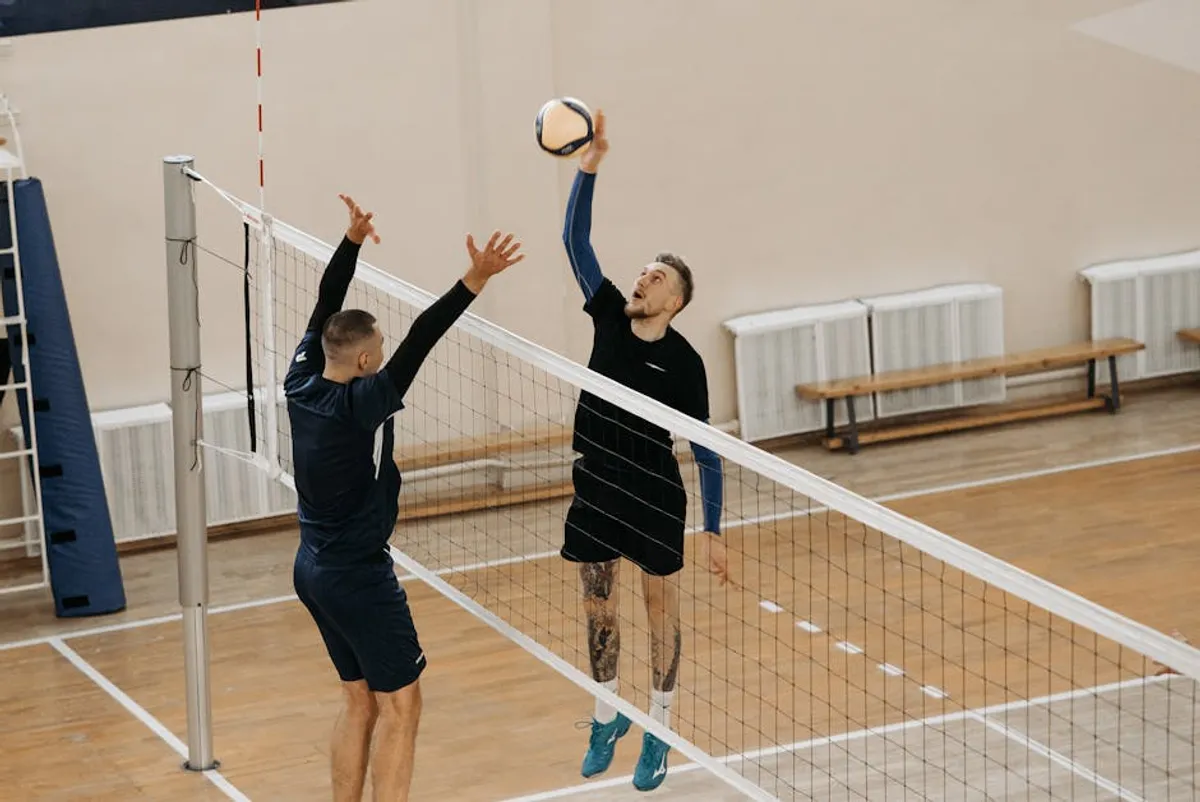
A Volleyball Legends Tier List categorizes the sport's most impactful and skilled players into distinct performance brackets, offering a structured framework for evaluating their historical significance. This approach moves beyond simple 'greatest of all time' discussions by providing nuanced placements based on a defined set of criteria. The objective is to offer a transparent, justifiable ranking that acknowledges both individual brilliance and sustained career impact, serving as a valuable reference for enthusiasts and analysts alike.
Defining the Tier System for Volleyball Legends
Our tier system employs a conventional letter-grade scale, where each tier signifies a specific level of historical dominance and influence within the sport. This hierarchy provides a clear, comparative lens through which to assess the careers of elite volleyball players.
- S-Tier: Unquestionable Icons. Players in this tier represent the absolute pinnacle of volleyball achievement. They possess unparalleled skill, have dominated their eras, accumulated significant individual and team accolades, and fundamentally altered how their position or the game itself was played. Their impact transcends generations.
- A-Tier: Elite Dominators. These legends consistently performed at an exceptionally high level, often leading their teams to major victories and earning numerous individual honors. While not always possessing the singular, transformative impact of S-Tier players, their careers are marked by sustained excellence and significant contributions to the sport's narrative.
- B-Tier: Highly Distinguished Performers. Players in this tier are recognized for their remarkable careers, often characterized by periods of peak dominance, key roles in championship teams, or pioneering stylistic contributions. They are undoubtedly legends, but their overall body of work or consistency might place them just below the very top echelon.
- C-Tier: Notable Influencers. This tier includes players who achieved significant milestones, demonstrated exceptional skill, or held prominent roles in successful teams. Their contributions are noteworthy, cementing their status as legends, though perhaps not with the same breadth or longevity as those in higher tiers.
Core Ranking Criteria for Player Evaluation
Each player's placement within this tier list is the result of a comprehensive evaluation against several key performance and impact indicators. No single metric is definitive; rather, a holistic assessment drives the final ranking.
- Individual Accolades: This includes MVP awards, Best Setter/Hitter/Blocker/Libero honors at major international tournaments (Olympics, World Championships, World Cup, Club World Championships), and national league distinctions.
- Team Success: The number and significance of gold medals won at major international competitions (Olympic Games, World Championships) and top-tier club championships. A player's role in these victories is heavily weighted.
- Statistical Dominance: While historical statistics can be inconsistent, where available, metrics like attack efficiency, block averages, serving aces, and reception percentages are considered, especially for players who consistently led in these categories.
- Career Longevity and Consistency: Sustained elite performance over many years, maintaining high standards across multiple seasons and major tournaments.
- Impact on the Game: How a player's style, innovation, or leadership influenced tactics, rules, or the popularization of volleyball. This includes players who redefined their positions.
- Versatility: The ability to excel in multiple aspects of the game or adapt to different roles and systems, contributing across various facets of team play.
- Clutch Performance: A demonstrated ability to perform under pressure in critical moments, delivering decisive plays in high-stakes matches.
S-Tier: Unquestionable Icons
These athletes represent the pinnacle of volleyball excellence, their careers defined by unparalleled skill, consistent dominance, and transformative impact.
Karch Kiraly (USA)
Kiraly stands alone as the only player, male or female, to win Olympic gold in both indoor and beach volleyball. His indoor career saw him lead the USA to consecutive Olympic golds in 1984 and 1988, alongside a World Championship title in 1986. Kiraly's versatility, leadership, and technical mastery were unmatched. He redefined the outside hitter position with his all-around skill, excelling in passing, attacking, blocking, and defense. His transition to beach volleyball resulted in another Olympic gold in 1996, cementing his status across both disciplines.
Best for: Unprecedented multi-discipline Olympic success and all-around indoor dominance.
Giba (Gilberto Godoy Filho) (Brazil)
Giba was the charismatic face of a Brazilian golden generation that dominated men's volleyball for over a decade. As an outside hitter, he led Brazil to Olympic gold in 2004, three consecutive World Championship titles (2002, 2006, 2010), and eight World League titles. His explosive attacking, tenacious defense, and inspiring leadership made him a pivotal figure. Giba consistently delivered in crucial matches, earning numerous individual MVP awards, including the 2006 World Championship MVP. His ability to elevate his performance on the biggest stages was a hallmark of his legendary career.
Best for: Orchestrating a dynastic era for Brazil and consistent big-game performance.
A-Tier: Elite Dominators
These players achieved sustained excellence, consistently performing at the highest levels and accumulating significant accolades, placing them just below the absolute peak.
Lorenzo Bernardi (Italy)
Known as "Mister Volleyball," Bernardi was a cornerstone of Italy's "Generation of Phenomena" in the 1990s. While Olympic gold eluded him, he won two World Championships (1990, 1994) and five European Championships. Bernardi was an incredibly complete outside hitter, excelling in all fundamentals – passing, attacking, blocking, and defense. He was twice named FIVB World Player of the Year (1995, 1996), a testament to his individual brilliance and impact on the game. His tactical intelligence and fierce competitiveness set him apart.
Best for: Defining the complete outside hitter role and leading Italy's dominant 90s era.
Regla Torres (Cuba)
Torres was a dominant force in women's volleyball, leading Cuba to three consecutive Olympic gold medals (1992, 1996, 2000) – an unparalleled feat. As a middle blocker, she possessed exceptional athleticism, timing, and power, making her one of the most feared blockers and attackers of her time. She was named MVP of the 1998 World Championship at just 23 years old. Her combination of physical prowess and mental toughness made her the anchor of the legendary "Spectacular Caribbean Girls."
Best for: Unprecedented three-peat Olympic gold and unparalleled middle blocker dominance.
Nikolay Karpol (Coach - Russia/USSR)
While primarily a coach, Karpol's influence on women's volleyball is legendary, deserving mention in any discussion of the sport's greatest figures. He led the Soviet Union and later Russia to two Olympic gold medals (1980, 1988), two World Championships, and numerous European titles. His demanding coaching style produced generations of world-class players and his teams were consistently among the best for decades. His strategic innovations and ability to extract peak performance from his athletes cemented his legendary status.
Best for: Sustained coaching dominance and unparalleled influence on women's international volleyball.
B-Tier: Highly Distinguished Performers
These players had exceptional careers, marked by significant achievements and periods of high-level play, cementing their place among the sport's elite.
Lyubov Sokolova (Russia)
Sokolova is one of the most decorated and versatile players in women's volleyball history. An outside hitter known for her powerful attack, solid passing, and strong defense, she earned two Olympic silver medals (2000, 2004) and two World Championship golds (2006, 2010) with Russia. Her career spanned over two decades at the highest level, playing for top clubs across Europe and consistently being a key offensive and defensive presence. Her longevity and ability to adapt to different roles across multiple generations of Russian teams highlight her enduring quality.
Best for: Exceptional longevity, versatility, and consistent high-level performance across multiple eras.
Bernardinho (Coach - Brazil)
Like Karpol, Bernardinho's impact as a coach is undeniable. He coached both the Brazilian men's and women's national teams to Olympic gold (men's in 2004, 2016; women's in 2008, 2012), making him one of the most successful coaches in history. His meticulous preparation, tactical acumen, and ability to motivate his players created two distinct dynasties for Brazilian volleyball. His sustained success across genders and multiple Olympic cycles underscores his legendary status.
Best for: Guiding both men's and women's Brazilian teams to multiple Olympic gold medals.
Evolving the Discussion: The Dynamic Nature of Tier Lists
A Volleyball Legends Tier List is not static; it evolves with new generations of talent, shifting historical perspectives, and the ongoing re-evaluation of past achievements. The criteria, while robust, are always subject to interpretation and debate. Factors like rule changes across eras, differences in training methodologies, and the varying competitive landscapes of professional leagues all contribute to the complexity of comparing athletes separated by decades.
The true value of such a list lies not just in the rankings themselves, but in the detailed justifications and the subsequent discussions they ignite. It serves as a tool for understanding the sport's rich history and celebrating the athletes who have shaped it.
Frequently Asked Questions
What makes a player an "S-Tier" legend?
An S-Tier legend demonstrates unparalleled skill, consistent dominance over an extended period, multiple major individual and team accolades, and a transformative impact on their position or the sport as a whole. They are often considered once-in-a-generation talents.
How are players from different eras compared?
Comparing players across different eras involves assessing their dominance relative to their contemporaries, considering the context of rule sets, training, and competition levels of their time. The focus is on their overall impact and legacy rather than direct head-to-head statistical comparisons, which can be misleading.
Why are coaches sometimes included in a "legends" discussion?
While not players, certain coaches have an undeniable and profound impact on the sport's development and the success of multiple teams over decades. Their strategic innovations, ability to develop talent, and consistent championship wins elevate them to legendary status, influencing the game as much as, if not more than, individual players.